When should my child start preschool in Irving TX? Age is only the first part of the answer. Most families also need to consider communication, separation, self-care, group routines, and how the school helps new children settle.
There is no single morning when a child becomes perfectly “ready.” A thoughtful start happens when the program fits the child and the adults have a clear transition plan.
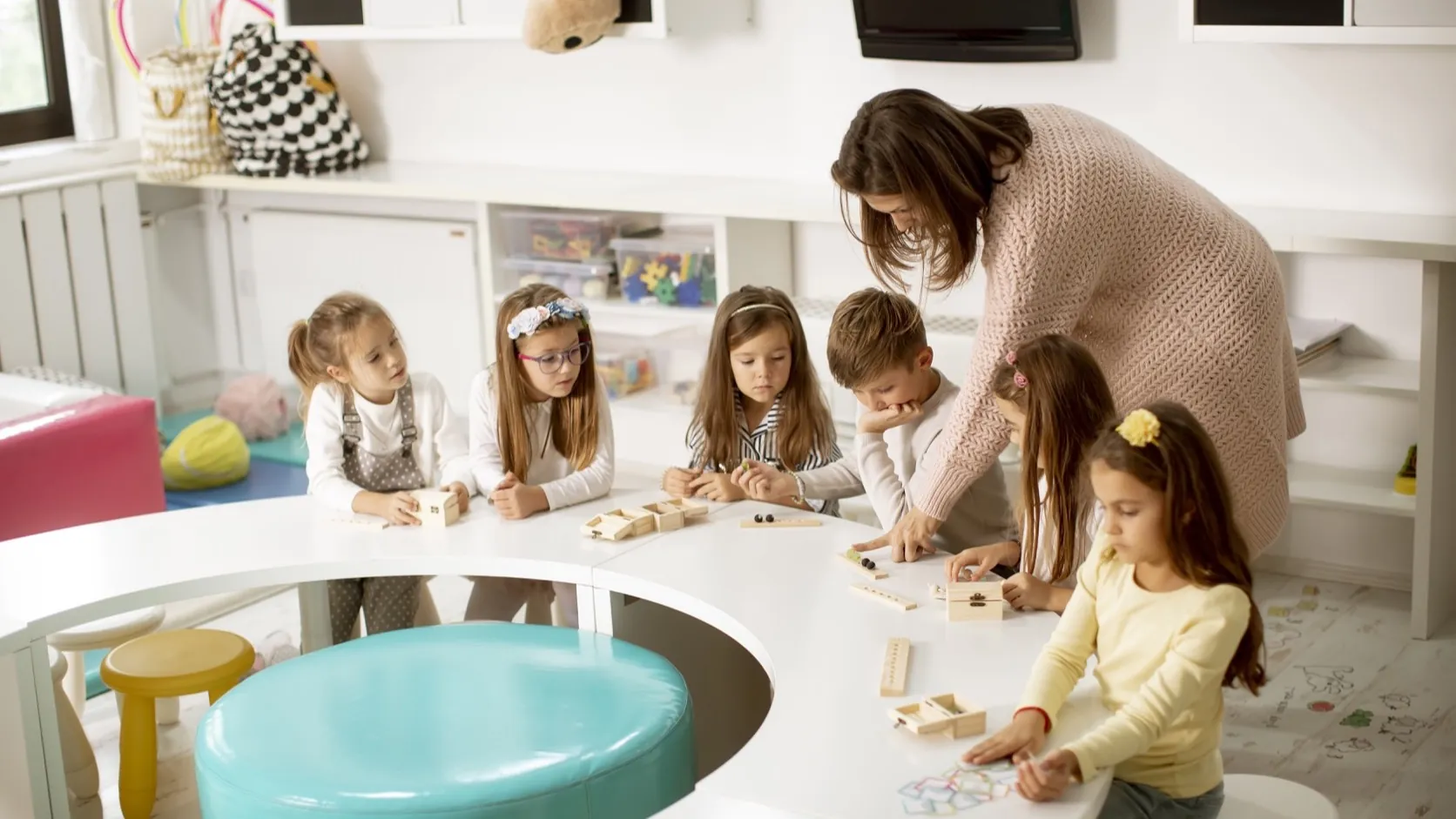
A preschool classroom should give children purposeful choices and calm adult support. Stock photograph licensed through Magnific.
Start with age, then look at the whole child
Age helps families find the right classroom. It does not tell you how a child will feel during arrival, manage a busy room, or respond to a new routine.
Roots Prep School’s preschool program serves children ages 3–5. Within that range, children may begin with very different strengths. One child may talk easily with adults but need help joining a group. Another may be independent with shoes and lunch but quiet during the first few weeks.
A useful preschool tour should help you see how teachers meet those differences. Ask how the room supports younger preschoolers, older preschoolers, and children entering a classroom for the first time.
What Texas public pre-K rules actually mean
Private preschool admission and public prekindergarten eligibility are not the same thing.
Texas public schools use age cutoffs tied to September 1. Free public pre-K also has specific eligibility requirements beyond age. The Texas Education Agency explains the current rules on its prekindergarten registration and enrollment page.
A private preschool can set its own program ages and enrollment process within licensing requirements. That is why parents should ask each school which classroom their child would enter, when a space is available, and how the school handles midyear starts.
Roots preschool ages
Texas public pre-K age date
readiness areas to observe
Five preschool-readiness areas to observe
Readiness is easier to understand when you look at everyday moments instead of asking whether your child can already read, write, or count.
| Readiness area | A sign you may notice | How preschool can help |
|---|---|---|
| Communication | Uses words, gestures, or pictures to express a need | Teachers model language and give time to respond |
| Separation and recovery | Becomes upset but can accept comfort from a trusted adult | A consistent arrival routine builds familiarity |
| Self-care | Helps with handwashing, eating, dressing, or toileting | Child-sized routines allow daily practice |
| Group participation | Watches, imitates, or joins a short shared activity | Teachers keep expectations brief and age appropriate |
| Energy and routine | Manages part of the day without becoming overwhelmed | A balanced day includes movement, meals, quiet, and rest |
Your child does not need to do every item independently. Look for emerging skills and a willingness to accept help.
Readiness is not a test
Development does not move in a perfectly straight line. A child may separate easily one week and need extra reassurance the next. Sleep, illness, a move, a new sibling, and changes at home can all affect behavior.
The Centers for Disease Control and Prevention describes developmental milestones as things most children—about 75% or more—can do by a certain age. Its 3-year-old milestone guide can help parents notice development, but a checklist is not a diagnosis or a preschool entrance exam.
If you have concerns about speech, movement, hearing, behavior, or another area of development, share them with your child’s pediatrician. Then ask the preschool how teachers communicate observations and work with families.
Ask how the school handles separation
Separation anxiety does not automatically mean a child should wait. It means the transition plan matters.
Ask whether families can tour with the child, meet the classroom teacher, and learn the arrival routine before the first day. Find out how the school contacts parents if a child remains distressed and what comfort strategies teachers use.
The American Academy of Pediatrics notes that readiness includes social, emotional, language, and physical development—not only academic skills. Its school-readiness guidance is a helpful reminder to look at the whole child.
At home, keep the goodbye short and predictable. Tell your child who will pick them up using a part of the day they understand, such as “after rest” or “after afternoon snack.”
Match the daily rhythm to your child
Ask the teacher to describe an ordinary day in plain language. Look for a balance of concentration, conversation, movement, outdoor time, meals, and rest.
At Roots, preschool children have an uninterrupted Montessori work cycle each morning. The prepared environment gives children time to choose purposeful work, repeat it, and put it away with guidance. EYFS learning areas and Texas kindergarten-readiness expectations help teachers observe growth across the whole child.
You can explore how those frameworks fit together on the Roots curriculum page and review the age range on the preschool program page.
Questions to bring to a preschool tour
Preschool-start checklist
- Which classroom fits my child’s age and current development?
- What does the first week usually look like?
- How do teachers respond when a child has a difficult goodbye?
- Does my child need to be fully toilet independent?
- How are meals, rest, and outdoor time handled?
- How do teachers share observations with parents?
- Can children start midyear, or are there fixed enrollment dates?
- What should we practice at home before the first day?
Listen for specific answers. A good conversation should help you picture your child in the room rather than make you feel that your child must arrive with every skill already mastered.
Frequently asked questions
Is age 3 too young to start preschool?
Not necessarily. Many children begin preschool at age 3, but the right timing depends on the child and the program. Look at communication, separation recovery, self-care, interest in other children, and ability to manage part of a group day. Ask how the school supports children who are new to structured routines.
Does my child need to be toilet trained before preschool?
Policies vary by school and classroom. Ask exactly what “toilet trained” means, how teachers handle reminders and accidents, and whether clothing must meet any requirements. A child who is still learning may do well when home and school use a calm, consistent routine.
What if my child cries at drop-off?
Crying at drop-off is common and does not by itself mean preschool is a poor fit. Ask how long the child usually remains upset, whether they accept comfort, and what happens next. A predictable goodbye, consistent attendance, and warm communication between teachers and parents can support adjustment.
Is private preschool the same as Texas public pre-K?
No. Public pre-K follows state age dates and eligibility rules. Private preschools establish their own program ages, admissions process, calendar, and tuition within applicable licensing requirements. Compare the classroom approach, schedule, teacher support, and transition plan—not only the program name.
How can I tell whether the school is ready for my child?
Observe how adults speak to children, adapt activities, respond to distress, and communicate with families. Ask for concrete examples. Preschool readiness is shared: children bring emerging skills, and the school provides an environment that helps those skills grow.
Talk through your child’s preschool start
Visit the classroom, meet the team, and ask how Roots would support your child’s first weeks.