Parents comparing a Texas preschool TEKS curriculum in Irving often wonder whether a Montessori classroom can prepare a child for the expectations of kindergarten. The two ideas can work together. Montessori describes how children learn through purposeful choices, hands-on materials, careful lessons, and time to repeat their work. Texas guidance describes the knowledge and skills children are moving toward.
The useful question is how a school connects daily classroom experiences with those learning goals. Parents should be able to see both sides: meaningful work for the child and a clear method for teachers to observe progress.
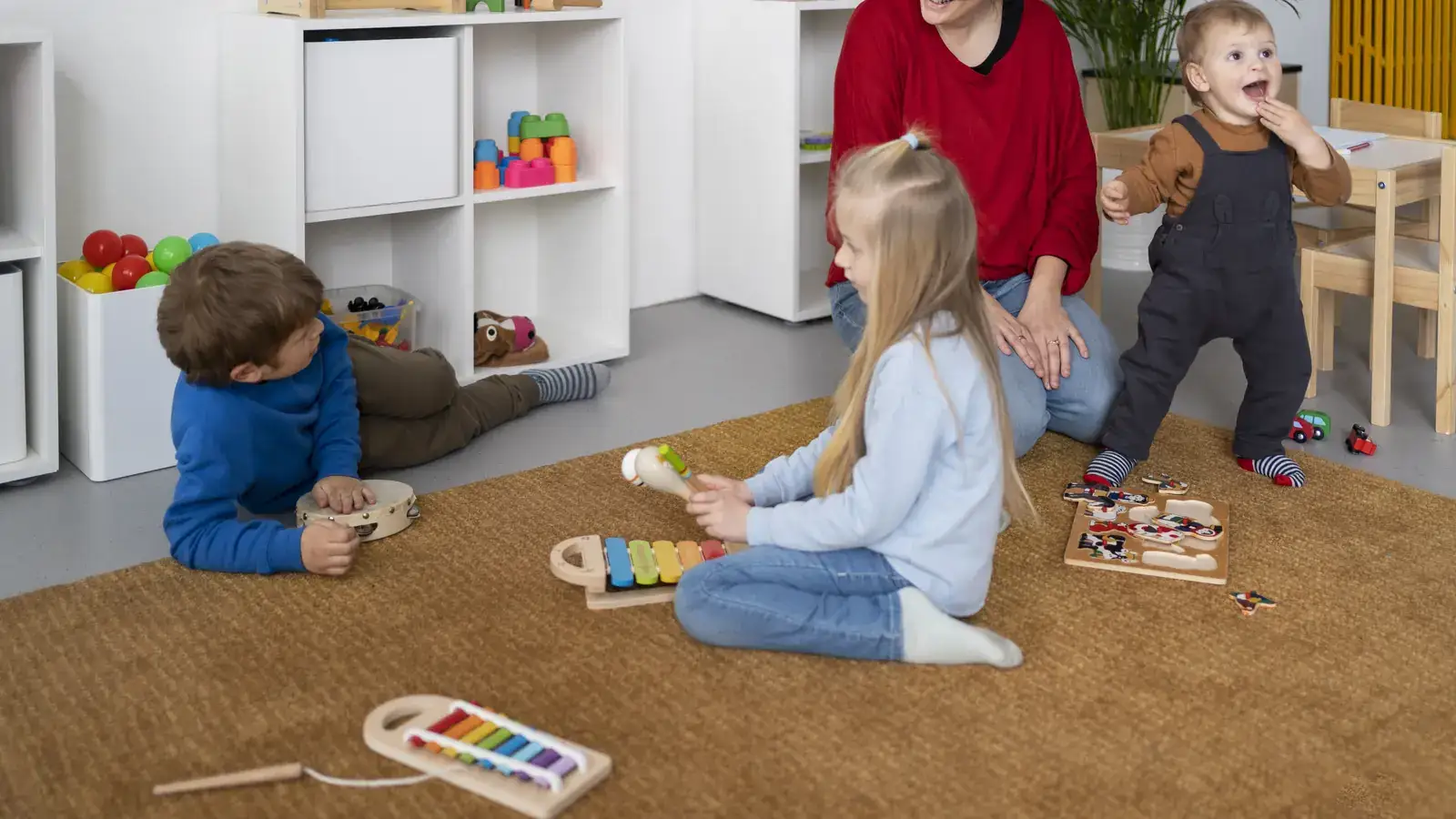
A licensed stock classroom scene selected for this article.
What TEKS means for a preschool family
TEKS stands for Texas Essential Knowledge and Skills. The Texas Education Agency defines TEKS as the state standards for what students should know and be able to do. The standards cover school subjects such as English language arts and reading, mathematics, science, social studies, fine arts, health, physical education, and technology applications.
Preschool has its own bridge into that system. The Texas Education Agency revised the Texas Prekindergarten Guidelines in 2022 and aligned them with kindergarten TEKS. Schools began implementing the revised guidelines in the 2023-2024 school year.
The agency is also clear about what the prekindergarten guidelines are not. They are not a complete curriculum, an assessment tool, or a checklist to be used in isolation. They guide planning for developmentally appropriate learning experiences for children ages 3 to 5, while recognizing that young children develop at different rates.
That distinction matters. A preschool can use Texas learning goals to guide instruction and observation while still giving children room to work at an appropriate pace.
How Montessori and Texas learning goals can fit together
Montessori classrooms are carefully prepared for child-centered learning. The Association Montessori Internationale describes accessible furniture, varied work spaces, and materials offered for free choice. A trained teacher introduces activities, observes children closely, and adjusts later lessons to what each child is ready to learn.
Those classroom practices do not replace state expectations. They give teachers concrete experiences to observe and connect with them.
A child building number quantities with physical materials may be working on counting, one-to-one correspondence, comparison, and mathematical language. A child tracing a sandpaper letter, listening for its sound, and building words with movable letters is practicing early literacy. Caring for plants, sorting natural objects, or describing changes in water can support scientific observation and vocabulary.
The activity stays real to the child. The teacher does the alignment work in planning, observation, and documentation.
What alignment can look like during an ordinary morning
Parents do not need to see a TEKS label taped to every shelf. They should see an organized classroom, purposeful materials, responsive teaching, and evidence that teachers know what children are learning.
| Classroom experience | Learning that may be observed | Texas pre-K area it can support |
|---|---|---|
| Counting objects and matching quantities | Stable counting order, one-to-one matching, more and less | Mathematics |
| Sound games and movable-letter work | Listening for sounds, connecting sounds with symbols, building vocabulary | Language and communication; emergent literacy |
| Pouring, fastening, and food preparation | Sequencing, coordination, independence, following a routine | Physical development; social and emotional development |
| Sorting leaves, shells, or classroom objects | Comparing attributes, classifying, describing observations | Science; mathematics |
| Grace and courtesy lessons | Taking turns, using words to solve a problem, participating in a group | Social and emotional development; language and communication |
| Drawing, painting, music, and movement | Expressing ideas, using tools, responding to rhythm and sound | Fine arts; physical development |
One activity can touch more than one area. A child preparing snack may count portions, use precise hand movements, follow a sequence, name ingredients, and work beside classmates. Teachers still need to identify what they are observing instead of making broad claims that every activity teaches everything.
What good alignment should avoid
TEKS alignment should not make preschool feel like a compressed version of elementary school. The Texas Prekindergarten Guidelines support play, exploration, discovery, problem-solving, and relationship-based learning. They also warn against using the guidelines as a rigid checklist.
Parents can be cautious when a school treats readiness as a race through isolated academic tasks. A child may be able to recite letters or numbers without understanding how to use them. Worksheets can show whether a child marked an answer, but they may reveal less about how that child plans, persists, explains an idea, or applies a skill with real materials.
The opposite problem is vagueness. A school should not use “child-led” to mean that teachers never plan, present lessons, record observations, or respond to gaps. Choice works inside a thoughtfully prepared environment. The adult remains responsible for safety, sequencing, individual support, and a balanced range of experiences.
How teachers can track progress without interrupting learning
Observation is central to Montessori teaching and useful for standards alignment. A teacher can watch how a child approaches an activity, which steps are secure, where help is needed, and whether the child applies a skill in a new setting.
Good records are specific. “Worked with counting” says very little. “Counted eight objects with one touch per object, then matched the quantity to the correct numeral” gives the teacher and family a clearer picture.
Over time, teachers can compare observations across the Texas pre-K domains. This helps them notice if a child has many opportunities in one area and needs more in another. It can also inform the next lesson, a change to the classroom environment, or a conversation with the family.
Progress should be shared with care. The Texas guidance recognizes considerable variation in children’s development. A single observation should not become a label. Families should hear what the child can do now, what the teacher is working on next, and how learning appears during everyday classroom life.
Kindergarten readiness is broader than early reading and math
Early literacy and mathematics matter, but the Texas Prekindergarten Guidelines span ten domains. They include social and emotional development, language and communication, emergent reading and writing, mathematics, science, social studies, fine arts, physical development, and technology applications.
That wider view matches what many families notice during the transition to kindergarten. Children need to communicate needs, listen to a short lesson, care for belongings, move safely with a group, try a task, recover from frustration, and work near other children. These abilities support academic learning throughout the day.
Montessori work can give children repeated practice with concentration, order, movement, language, and responsibility. Alignment is strongest when the school can show how those experiences connect with Texas expectations and how teachers respond to each child’s development.
The Roots curriculum page explains how Montessori, EYFS, and Texas learning expectations are used together. Families can also review the preschool program before visiting.
Questions to ask during a preschool tour
A few concrete questions will tell you more than a long list of curriculum names:
- Which version of the Texas Prekindergarten Guidelines do you use?
- How do teachers connect Montessori lessons and classroom observations with the guidelines?
- Can you show an example of how one skill develops over several months?
- How do you make sure children receive experiences across all learning domains?
- What happens when a child is ahead in one area and needs more support in another?
- How is progress shared with families?
- How much uninterrupted work time do children have each day?
- What does the transition from preschool to kindergarten look like?
Listen for specific examples. A teacher should be able to describe an activity, the skill being observed, and the next reasonable step without promising that every child will reach every outcome on the same schedule.
The Roots FAQ covers programs, communication, hours, and enrollment. The tour page is the best place to arrange a classroom visit and ask these questions in person.
Frequently asked questions
Are TEKS required in private preschool?
TEKS are Texas state standards for school subjects, while the Texas Prekindergarten Guidelines guide early learning for ages 3 to 5 and align with kindergarten TEKS. Requirements can depend on the type of program. Parents should ask each school which standards or guidelines it follows and how alignment is documented.
Does TEKS alignment mean preschool children use worksheets?
No. The Texas Prekindergarten Guidelines support developmentally appropriate learning through play, exploration, discovery, and problem-solving. A school can observe progress during hands-on activities, conversation, movement, art, practical routines, and teacher-led lessons. Worksheets are not the definition of standards alignment.
Can Montessori prepare a child for a Texas kindergarten classroom?
A Montessori preschool can support kindergarten readiness when teachers provide a balanced range of experiences, observe each child’s progress, and connect planning with Texas pre-K guidance. Parents should ask how the school tracks language, literacy, math, social-emotional, physical, creative, and other learning areas over time.
What should an Irving parent look for in a TEKS-aligned preschool?
Look for teachers who can explain the 2022 Texas Prekindergarten Guidelines, show how classroom activities connect with learning goals, and share specific observations with families. The classroom should include purposeful hands-on work, language, movement, social practice, outdoor experiences, and time for children to concentrate.
See how classroom work connects with readiness
Visit Roots Prep School in Irving, observe a Montessori work period, and ask how teachers connect daily learning with Texas expectations.